 Add to Chrome
 Add to Firefox
 Add to Edge
Segment and Matte Anything in a Unified Model
Jan 17, 2026
Segment Anything (SAM) has recently pushed the boundaries of segmentation by demonstrating zero-shot generalization and flexible prompting after training on over one billion masks. Despite this, its mask prediction accuracy often falls short of the precision required in real-world applications. While several refinement modules have been proposed to boost SAM's segmentation quality, achieving highly accurate object delineation within a single, unified framework remains an open challenge. Furthermore, interactive image matting, which aims to generate fine-grained alpha mattes guided by diverse user hints, has not yet been explored in the context of SAM. Insights from recent studies highlight strong correlations between segmentation and matting, suggesting the feasibility of a unified model capable of both tasks. In this paper, we introduce Segment And Matte Anything (SAMA), a lightweight extension of SAM that delivers high-quality interactive image segmentation and matting with minimal extra parameters. Our Multi-View Localization Encoder (MVLE) captures detailed features from local views, while the Localization Adapter (Local-Adapter) refines mask outputs by recovering subtle boundary details. We also incorporate two prediction heads for each task into the architecture to generate segmentation and matting masks, simultaneously. Trained on a diverse dataset aggregated from publicly available sources, SAMA achieves state-of-the-art performance across multiple segmentation and matting benchmarks, showcasing its adaptability and effectiveness in a wide range of downstream tasks.

Is More Context Always Better? Examining LLM Reasoning Capability for Time Interval Prediction
Jan 15, 2026Large Language Models (LLMs) have demonstrated impressive capabilities in reasoning and prediction across different domains. Yet, their ability to infer temporal regularities from structured behavioral data remains underexplored. This paper presents a systematic study investigating whether LLMs can predict time intervals between recurring user actions, such as repeated purchases, and how different levels of contextual information shape their predictive behavior. Using a simple but representative repurchase scenario, we benchmark state-of-the-art LLMs in zero-shot settings against both statistical and machine-learning models. Two key findings emerge. First, while LLMs surpass lightweight statistical baselines, they consistently underperform dedicated machine-learning models, showing their limited ability to capture quantitative temporal structure. Second, although moderate context can improve LLM accuracy, adding further user-level detail degrades performance. These results challenge the assumption that "more context leads to better reasoning". Our study highlights fundamental limitations of today's LLMs in structured temporal inference and offers guidance for designing future context-aware hybrid models that integrate statistical precision with linguistic flexibility.
To See or To Read: User Behavior Reasoning in Multimodal LLMs
Nov 05, 2025Multimodal Large Language Models (MLLMs) are reshaping how modern agentic systems reason over sequential user-behavior data. However, whether textual or image representations of user behavior data are more effective for maximizing MLLM performance remains underexplored. We present \texttt{BehaviorLens}, a systematic benchmarking framework for assessing modality trade-offs in user-behavior reasoning across six MLLMs by representing transaction data as (1) a text paragraph, (2) a scatter plot, and (3) a flowchart. Using a real-world purchase-sequence dataset, we find that when data is represented as images, MLLMs next-purchase prediction accuracy is improved by 87.5% compared with an equivalent textual representation without any additional computational cost.
Spatial Reasoning in Foundation Models: Benchmarking Object-Centric Spatial Understanding
Sep 26, 2025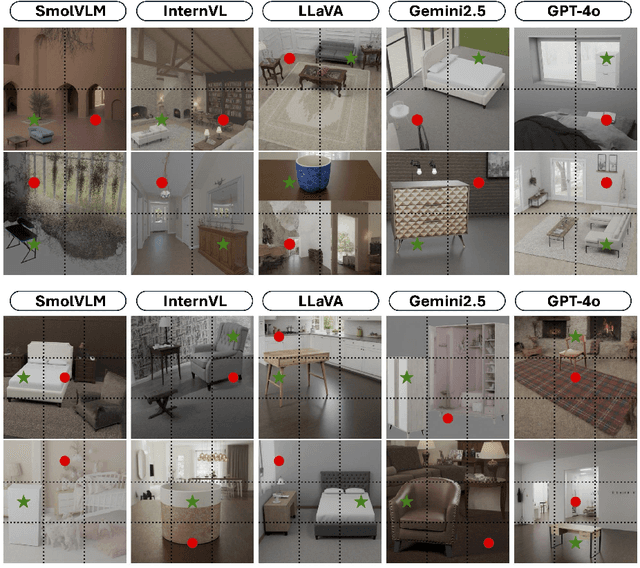
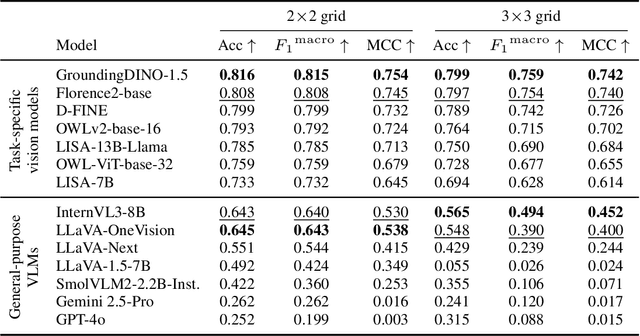
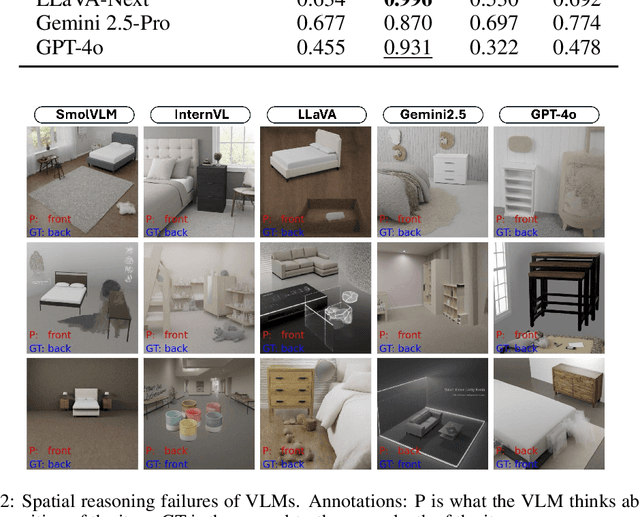
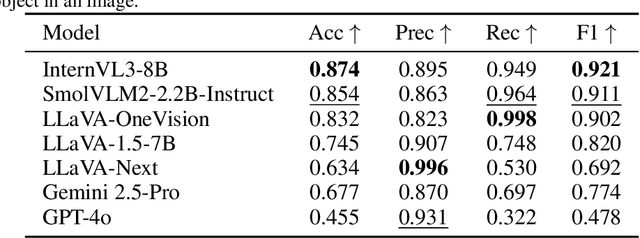
Spatial understanding is a critical capability for vision foundation models. While recent advances in large vision models or vision-language models (VLMs) have expanded recognition capabilities, most benchmarks emphasize localization accuracy rather than whether models capture how objects are arranged and related within a scene. This gap is consequential; effective scene understanding requires not only identifying objects, but reasoning about their relative positions, groupings, and depth. In this paper, we present a systematic benchmark for object-centric spatial reasoning in foundation models. Using a controlled synthetic dataset, we evaluate state-of-the-art vision models (e.g., GroundingDINO, Florence-2, OWLv2) and large VLMs (e.g., InternVL, LLaVA, GPT-4o) across three tasks: spatial localization, spatial reasoning, and downstream retrieval tasks. We find a stable trade-off: detectors such as GroundingDINO and OWLv2 deliver precise boxes with limited relational reasoning, while VLMs like SmolVLM and GPT-4o provide coarse layout cues and fluent captions but struggle with fine-grained spatial context. Our study highlights the gap between localization and true spatial understanding, and pointing toward the need for spatially-aware foundation models in the community.
VL-CLIP: Enhancing Multimodal Recommendations via Visual Grounding and LLM-Augmented CLIP Embeddings
Jul 22, 2025Multimodal learning plays a critical role in e-commerce recommendation platforms today, enabling accurate recommendations and product understanding. However, existing vision-language models, such as CLIP, face key challenges in e-commerce recommendation systems: 1) Weak object-level alignment, where global image embeddings fail to capture fine-grained product attributes, leading to suboptimal retrieval performance; 2) Ambiguous textual representations, where product descriptions often lack contextual clarity, affecting cross-modal matching; and 3) Domain mismatch, as generic vision-language models may not generalize well to e-commerce-specific data. To address these limitations, we propose a framework, VL-CLIP, that enhances CLIP embeddings by integrating Visual Grounding for fine-grained visual understanding and an LLM-based agent for generating enriched text embeddings. Visual Grounding refines image representations by localizing key products, while the LLM agent enhances textual features by disambiguating product descriptions. Our approach significantly improves retrieval accuracy, multimodal retrieval effectiveness, and recommendation quality across tens of millions of items on one of the largest e-commerce platforms in the U.S., increasing CTR by 18.6%, ATC by 15.5%, and GMV by 4.0%. Additional experimental results show that our framework outperforms vision-language models, including CLIP, FashionCLIP, and GCL, in both precision and semantic alignment, demonstrating the potential of combining object-aware visual grounding and LLM-enhanced text representation for robust multimodal recommendations.
LLM-driven Constrained Copy Generation through Iterative Refinement
Apr 14, 2025Crafting a marketing message (copy), or copywriting is a challenging generation task, as the copy must adhere to various constraints. Copy creation is inherently iterative for humans, starting with an initial draft followed by successive refinements. However, manual copy creation is time-consuming and expensive, resulting in only a few copies for each use case. This limitation restricts our ability to personalize content to customers. Contrary to the manual approach, LLMs can generate copies quickly, but the generated content does not consistently meet all the constraints on the first attempt (similar to humans). While recent studies have shown promise in improving constrained generation through iterative refinement, they have primarily addressed tasks with only a few simple constraints. Consequently, the effectiveness of iterative refinement for tasks such as copy generation, which involves many intricate constraints, remains unclear. To address this gap, we propose an LLM-based end-to-end framework for scalable copy generation using iterative refinement. To the best of our knowledge, this is the first study to address multiple challenging constraints simultaneously in copy generation. Examples of these constraints include length, topics, keywords, preferred lexical ordering, and tone of voice. We demonstrate the performance of our framework by creating copies for e-commerce banners for three different use cases of varying complexity. Our results show that iterative refinement increases the copy success rate by $16.25-35.91$% across use cases. Furthermore, the copies generated using our approach outperformed manually created content in multiple pilot studies using a multi-armed bandit framework. The winning copy improved the click-through rate by $38.5-45.21$%.
Improving Sequential Recommender Systems with Online and In-store User Behavior
Dec 03, 2024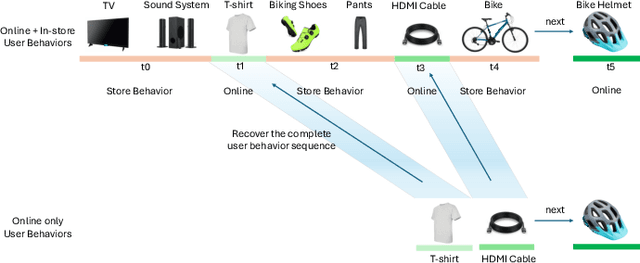
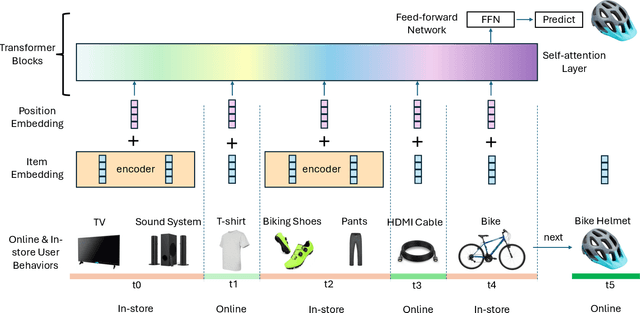
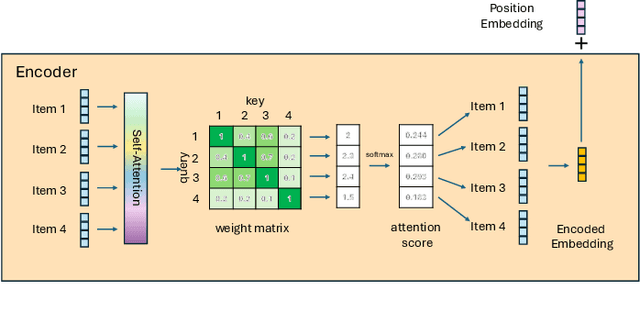

Online e-commerce platforms have been extending in-store shopping, which allows users to keep the canonical online browsing and checkout experience while exploring in-store shopping. However, the growing transition between online and in-store becomes a challenge to sequential recommender systems for future online interaction prediction due to the lack of holistic modeling of hybrid user behaviors (online and in-store). The challenges are twofold. First, combining online and in-store user behavior data into a single data schema and supporting multiple stages in the model life cycle (pre-training, training, inference, etc.) organically needs a new data pipeline design. Second, online recommender systems, which solely rely on online user behavior sequences, must be redesigned to support online and in-store user data as input under the sequential modeling setting. To overcome the first challenge, we propose a hybrid, omnichannel data pipeline to compile online and in-store user behavior data by caching information from diverse data sources. Later, we introduce a model-agnostic encoder module to the sequential recommender system to interpret the user in-store transaction and augment the modeling capacity for better online interaction prediction given the hybrid user behavior.
Triple Modality Fusion: Aligning Visual, Textual, and Graph Data with Large Language Models for Multi-Behavior Recommendations
Oct 16, 2024
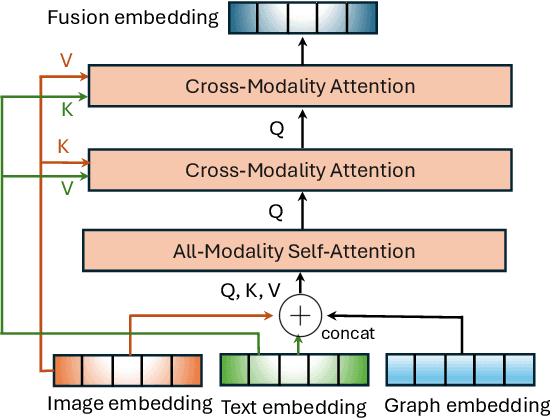
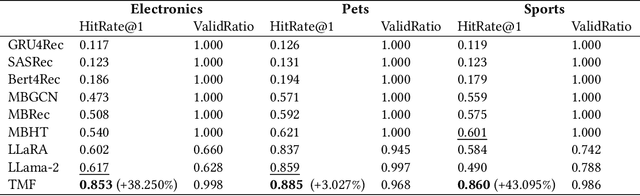
Integrating diverse data modalities is crucial for enhancing the performance of personalized recommendation systems. Traditional models, which often rely on singular data sources, lack the depth needed to accurately capture the multifaceted nature of item features and user behaviors. This paper introduces a novel framework for multi-behavior recommendations, leveraging the fusion of triple-modality, which is visual, textual, and graph data through alignment with large language models (LLMs). By incorporating visual information, we capture contextual and aesthetic item characteristics; textual data provides insights into user interests and item features in detail; and graph data elucidates relationships within the item-behavior heterogeneous graphs. Our proposed model called Triple Modality Fusion (TMF) utilizes the power of LLMs to align and integrate these three modalities, achieving a comprehensive representation of user behaviors. The LLM models the user's interactions including behaviors and item features in natural languages. Initially, the LLM is warmed up using only natural language-based prompts. We then devise the modality fusion module based on cross-attention and self-attention mechanisms to integrate different modalities from other models into the same embedding space and incorporate them into an LLM. Extensive experiments demonstrate the effectiveness of our approach in improving recommendation accuracy. Further ablation studies validate the effectiveness of our model design and benefits of the TMF.
Decoding Style: Efficient Fine-Tuning of LLMs for Image-Guided Outfit Recommendation with Preference
Sep 18, 2024
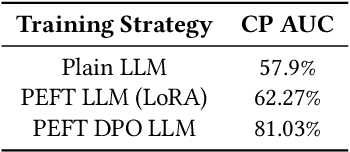

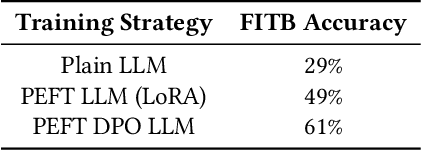
Personalized outfit recommendation remains a complex challenge, demanding both fashion compatibility understanding and trend awareness. This paper presents a novel framework that harnesses the expressive power of large language models (LLMs) for this task, mitigating their "black box" and static nature through fine-tuning and direct feedback integration. We bridge the item visual-textual gap in items descriptions by employing image captioning with a Multimodal Large Language Model (MLLM). This enables the LLM to extract style and color characteristics from human-curated fashion images, forming the basis for personalized recommendations. The LLM is efficiently fine-tuned on the open-source Polyvore dataset of curated fashion images, optimizing its ability to recommend stylish outfits. A direct preference mechanism using negative examples is employed to enhance the LLM's decision-making process. This creates a self-enhancing AI feedback loop that continuously refines recommendations in line with seasonal fashion trends. Our framework is evaluated on the Polyvore dataset, demonstrating its effectiveness in two key tasks: fill-in-the-blank, and complementary item retrieval. These evaluations underline the framework's ability to generate stylish, trend-aligned outfit suggestions, continuously improving through direct feedback. The evaluation results demonstrated that our proposed framework significantly outperforms the base LLM, creating more cohesive outfits. The improved performance in these tasks underscores the proposed framework's potential to enhance the shopping experience with accurate suggestions, proving its effectiveness over the vanilla LLM based outfit generation.
Leveraging User-Generated Reviews for Recommender Systems with Dynamic Headers
Sep 11, 2024E-commerce platforms have a vast catalog of items to cater to their customers' shopping interests. Most of these platforms assist their customers in the shopping process by offering optimized recommendation carousels, designed to help customers quickly locate their desired items. Many models have been proposed in academic literature to generate and enhance the ranking and recall set of items in these carousels. Conventionally, the accompanying carousel title text (header) of these carousels remains static. In most instances, a generic text such as "Items similar to your current viewing" is utilized. Fixed variations such as the inclusion of specific attributes "Other items from a similar seller" or "Items from a similar brand" in addition to "frequently bought together" or "considered together" are observed as well. This work proposes a novel approach to customize the header generation process of these carousels. Our work leverages user-generated reviews that lay focus on specific attributes (aspects) of an item that were favorably perceived by users during their interaction with the given item. We extract these aspects from reviews and train a graph neural network-based model under the framework of a conditional ranking task. We refer to our innovative methodology as Dynamic Text Snippets (DTS) which generates multiple header texts for an anchor item and its recall set. Our approach demonstrates the potential of utilizing user-generated reviews and presents a unique paradigm for exploring increasingly context-aware recommendation systems.